UK Railcards and London Travelcards: what visitors can use
Which UK Railcards exist, who can buy them, what the one-third discount covers and where its time and minimum-fare limits apply, plus how London Travelcards fit in for visitors from the US.

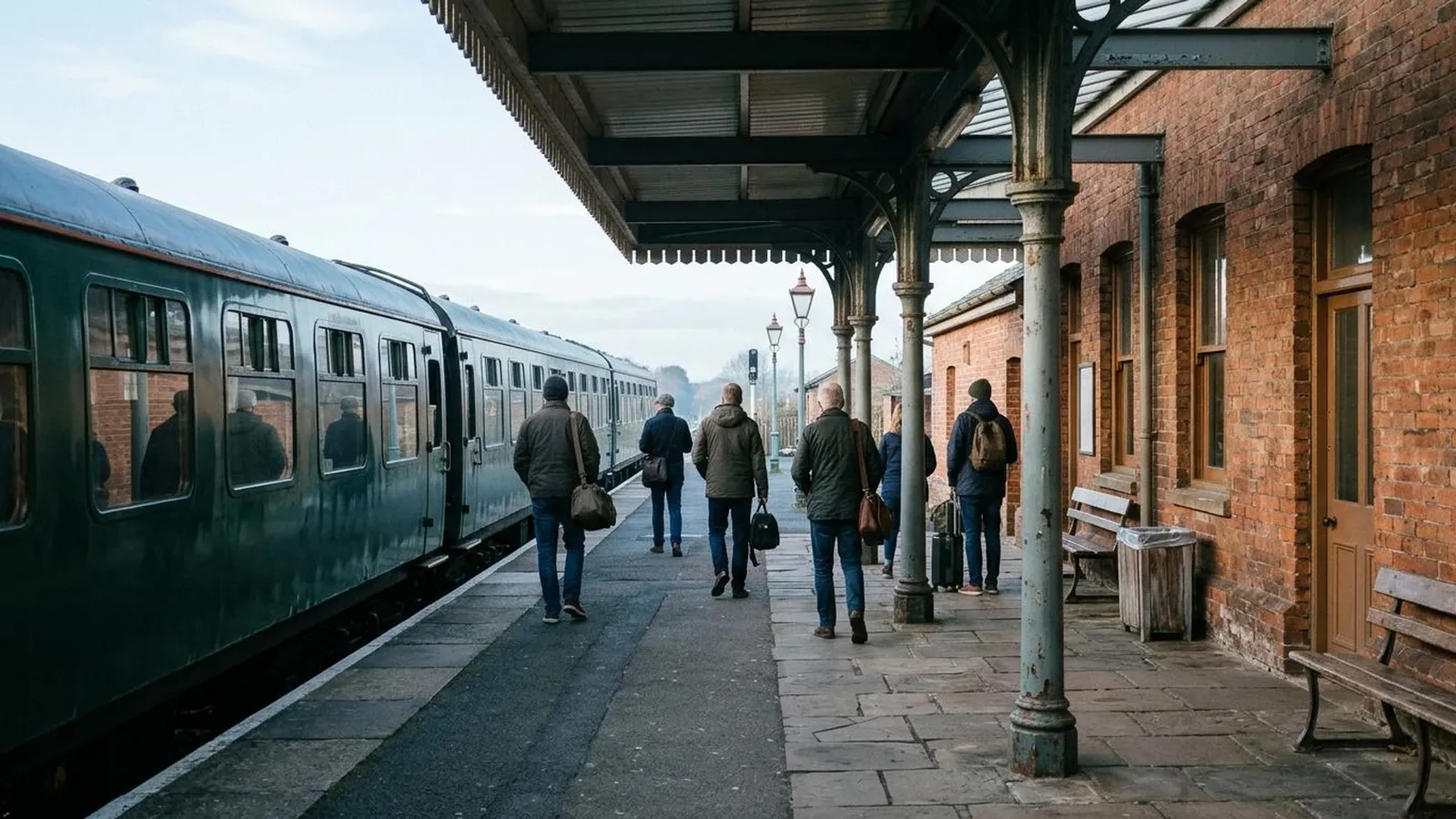
A Railcard is a discount card for trains in Great Britain. You pay once for a year (or three years on some cards), then buy tickets at a reduced price for as long as the card is valid. Most Railcards take a third off eligible fares. A London Travelcard is different: it’s a ticket, not a discount card, giving unlimited travel within chosen London zones for a set period.
For a visitor from the US, the useful questions are which cards you can actually get, whether the discount applies to the trains and times you plan to use, and whether a single trip is long enough to recover the cost. This guide covers those, based on the official Railcard and National Rail pages as checked on November 14, 2026.
The Railcards that exist
The official site lists nine national Railcards (Railcard, checked November 14, 2026; National Rail, checked November 14, 2026). The discount and eligibility are the operator’s; the last column is our reading of how relevant each is to a US visitor, not an official statement.
| Railcard | Who it’s for | Discount | Our reading for a US visitor (editorial) |
|---|---|---|---|
| Two Together | Two named people aged 16+ traveling together | 1/3 off | Often the most relevant for couples |
| Senior | Age 60 and over | 1/3 off most fares | Relevant if you meet the age rule |
| 16-25 | Ages 16 to 25 (plus mature students in full-time education in Great Britain) | 1/3 off | Relevant on the age route |
| 26-30 | Ages 26 to 30; digital only | 1/3 off | Relevant if you can use the app |
| Family & Friends | Up to 4 adults and 4 children; at least one named adult and one child must travel | 1/3 off adults, 60% off children 5 to 15 | Relevant for families |
| Network | Age 16+, travel within London and the South East | 1/3 off up to 4 adults, 60% off up to 4 children | Only for that region |
| Disabled Persons | Disability meeting set criteria | 1/3 off for holder and one companion | Check criteria; proof is required |
| Veterans | UK Armed Forces veterans | 1/3 off | UK service only |
| 16-17 Saver | Ages 16 to 17, England and Wales | 50% off most fares | Check the eligibility rules |
Can a visitor from the US buy one?
The official pages we read don’t state a UK residency requirement for the general-purpose cards, and they don’t address overseas visitors directly. What they do say is that the accepted forms of ID include a passport, alongside a UK driving license or an EEA national identity card (16-25 Railcard, checked November 14, 2026; Railcard FAQs, checked November 14, 2026). The Two Together and Family & Friends pages say “there are no eligibility criteria” beyond being 16 or over (Two Together; Family & Friends, both checked November 14, 2026).
Some cards are tied to UK circumstances by their own rules: the Veterans Railcard is for UK Armed Forces veterans, the mature-student route on the 16-25 card requires full-time education in Great Britain, and the Disabled Persons Railcard requires proof against set criteria. Because the pages don’t address overseas addresses or using the app with a non-UK phone, confirm those details with Railcard help before you rely on a card for a trip.
Timing matters for visitors. A physical card can take up to 10 days to arrive by standard post. A digital card arrives through an activation link to the Railcard app, and the operator warns that the first confirmation email “cannot be used to buy discounted tickets” (Two Together). National Rail adds that a digital card can be stored on up to two devices and that it’s your responsibility to check the card is in date (National Rail). Buy it before you book discounted tickets, not at the gate.
The rules that limit the discount
The headline is one third off, but each card has conditions. Read the ones for the card you’re considering.
Time-of-day limits. The Two Together Railcard applies to journeys from 9:30 a.m. Monday to Friday, and at any time on weekends and public holidays. Both named people must start and end the journey together; if one leaves early, both tickets become invalid (Two Together). The Network Railcard applies after 10 a.m. on weekdays within London and the South East (Network Railcard, checked November 14, 2026).
Minimum fares. The 16-25 and 26-30 Railcards carry a minimum fare, £12 when we checked, on weekday journeys before 10 a.m. The 16-25 page says it doesn’t apply to Advance tickets, on public holidays or in July and August (16-25 Railcard; 26-30 Railcard, checked November 14, 2026). The Network Railcard has its own weekday minimum fare.
London and the South East morning peak. The Senior and Family & Friends cards don’t give a discount on weekday morning peak journeys made entirely within the London and South East area, except on public holidays (Senior Railcard; Family & Friends, checked November 14, 2026).
Ticket types. The individual card pages list which tickets each covers, and most include Standard Off-Peak and Advance tickets. The 26-30 card generally excludes First Class apart from First Class Advance; the Family & Friends card excludes First Class; and the Network card excludes Advance tickets. The Two Together and Senior pages list season tickets and Eurostar as excluded; the 16-17 Saver is the exception that covers season tickets (Two Together; Senior Railcard; Railcard, checked November 14, 2026). If you plan to rely on Advance fares, check that your card covers them.

Is it worth it on a short trip?
That depends on your own fares, and we don’t quote prices here. The test is simple: add up the regular fares for the journeys you’ve planned, take a third off the ones the card would cover at your travel times, and compare the saving with the card’s price on the official site. As a hypothetical example, two people planning several longer off-peak journeys may save more than the card costs, while one short peak-hour trip won’t. A Railcard is also separate from a rail pass; a pass such as BritRail may suit a visitor making many journeys, and our rail pass guide covers European passes.
Railcards also reduce some sleeper fares. The Caledonian Sleeper guide sets out which cards apply to which rooms.
London Travelcards
A Travelcard gives unlimited travel within the zones it covers on National Rail, the London Underground and the DLR, and on all London buses; trams are covered if the Travelcard includes Zones 3, 4, 5 or 6 (National Rail, checked November 14, 2026). Travelcards come as 1-day, 7-day, monthly and longer periods. Travelcards for 7 days or longer can only be loaded onto an Oyster card or a train company Smartcard.
The Anytime Day Travelcard is valid on the date shown and until 4:29 a.m. the following morning (National Rail, checked November 14, 2026). If you’re traveling into London from elsewhere in the South East, you may be able to buy a return rail ticket that includes a one-day Travelcard; National Rail says to check its journey planner.
For many visitors, though, a Travelcard is not the cheapest way around London. National Rail says that for several journeys in a day, “daily capping is better value than buying a Day Travelcard” in Zones 1 to 9. With pay as you go on Oyster or contactless, your charges stop rising once they reach a daily cap, and there is also a Monday-to-Sunday weekly cap. Railcard discounts can be added to an Oyster card for up to a third off pay as you go, except for the 16-17 Saver, Two Together, Family & Friends and Network Railcards; Railcard discounts aren’t available on contactless (National Rail).
Transport for London’s own fares pages refused automated access when we checked, so we haven’t quoted TfL’s caps, zone details or its guidance on using a US-issued contactless card. Check tfl.gov.uk for current caps and accepted cards before you travel.
What a US visitor can and can’t use
You can generally consider the Two Together, Senior, 16-25 (age route), 26-30, Family & Friends and Network Railcards, using a passport as ID, subject to confirming the address and app details with Railcard. You can use Travelcards and Oyster pay as you go like anyone else. You can’t use the Veterans Railcard unless you’re a UK Armed Forces veteran, and the mature-student route requires study in Great Britain. No Railcard discount applies to contactless pay as you go.
Common questions
Do I need to carry my Railcard? The discounted ticket depends on a valid card, and National Rail says it’s your responsibility to check it’s in date. Carry the physical card or have the app ready with your ticket.
Can I change the second person on a Two Together Railcard? No. You can’t add a different person after you buy it, and both named people must travel together.
Does a Railcard work on the London Underground? Most Underground and DLR tickets aren’t discounted, but eligible Railcards can be added to an Oyster card for pay-as-you-go discounts.
Is a Day Travelcard better than contactless? National Rail says daily capping is better value than a Day Travelcard for several journeys in a day in Zones 1 to 9.
Sources checked November 14, 2026: Railcard (homepage, 16-25, 26-30, Two Together, Senior, Family & Friends, Network pages and FAQs) and National Rail (Railcards, Oyster, Contactless and Travelcards, Anytime Day Travelcard). Transport for London’s fares pages were not accessible to us; check them directly.