Rocky Mountaineer: choosing a route and SilverLeaf or GoldLeaf
How Rocky Mountaineer works in Western Canada: its two current routes, SilverLeaf versus GoldLeaf, the daylight-only schedule with a hotel night in Kamloops, what's included, luggage, and the change and cancellation rules to read before you book.

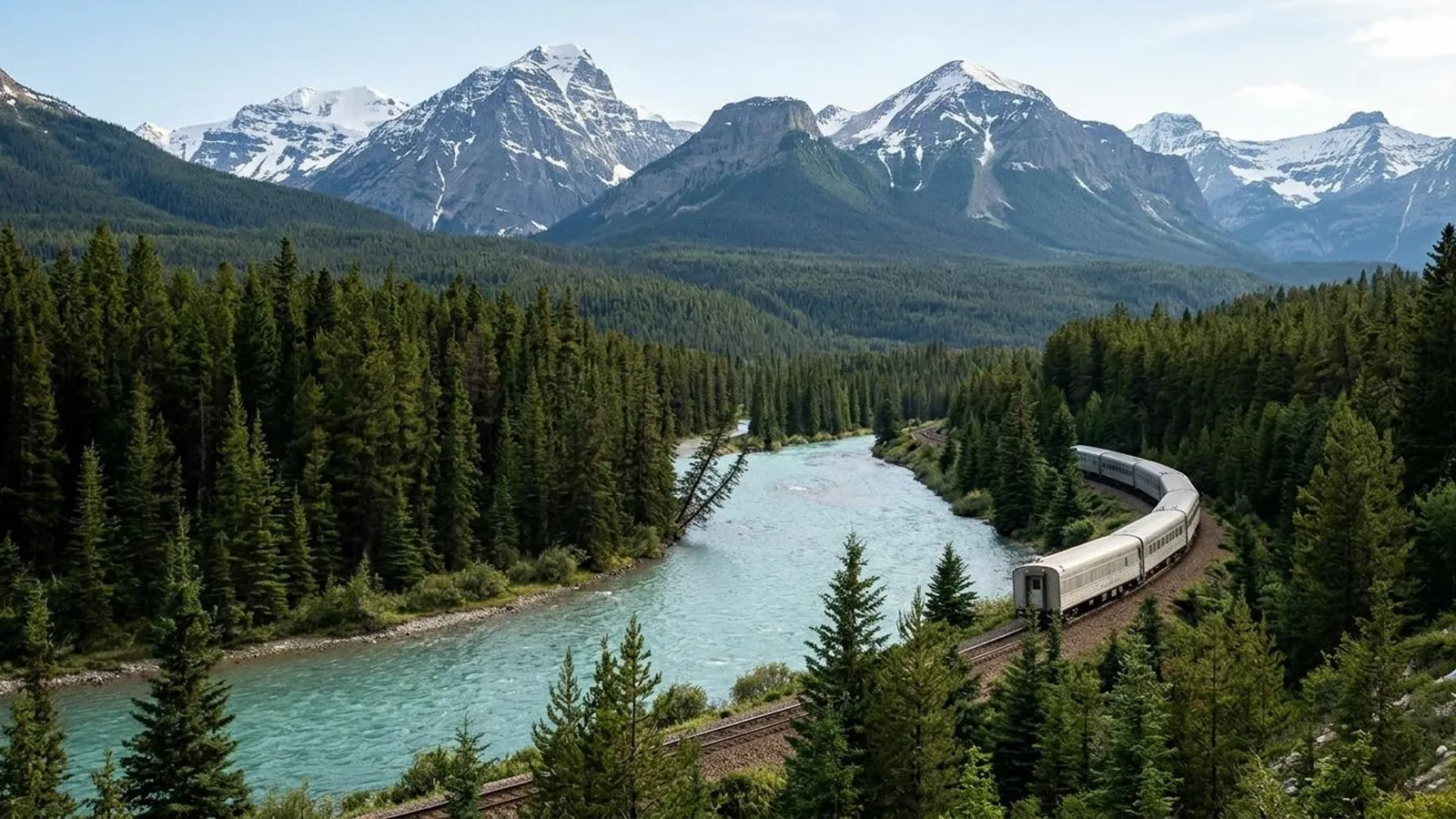
Rocky Mountaineer is a scenic rail operator in Western Canada that runs glass-dome trains between Vancouver and the Canadian Rockies. It works differently from almost every other long-distance train: it travels only by day, has no sleeper cars, and puts every guest in a hotel overnight at the midpoint, Kamloops (Rocky Mountaineer FAQ, checked November 14, 2026).
This guide covers the rail decisions: which route, which service level, what the fare includes, and the rules on luggage, children and changes. Whether a two-day luxury rail trip suits your Canada itinerary is a wider planning question, and Travel Tutor covers whole-trip planning.
The routes now running
Rocky Mountaineer currently names two Canadian rail routes, and both start or end in Vancouver (Rocky Mountaineer, Journey through the Clouds and First Passage to the West, both checked November 14, 2026):
| Route | Endpoints | Overnight | Days on the train |
|---|---|---|---|
| First Passage to the West | Vancouver and Banff, also stopping at Lake Louise | Kamloops | 2 |
| Journey through the Clouds | Vancouver and Jasper | Kamloops | 2 |
The operator says all its packages run in both directions, so you can start in the Rockies and finish in Vancouver, or the reverse. Its highlights for First Passage to the West include Rogers Pass, Kicking Horse Canyon and the Spiral Tunnels; for Journey through the Clouds, they include Hell’s Gate, Pyramid Falls and Mount Robson, which it calls the highest peak in the Canadian Rockies.
A third route is ending. Rocky Mountaineer’s page for Rainforest to Gold Rush, which ran from Vancouver through Whistler and Quesnel to Jasper, says the route “will be coming to an end after our 2026 season,” and that from 2027 travelers can use First Passage to the West and Journey through the Clouds instead (Rocky Mountaineer, Rainforest to Gold Rush, checked November 14, 2026). If you’ve seen older itineraries through Whistler, they no longer apply to future seasons.
The company behind Rocky Mountaineer also runs a separate daylight train in the American Southwest under the name Canyon Spirit, through Colorado and Utah, which it describes as part of the same Armstrong Collective group (Canyon Spirit, checked November 14, 2026). It’s booked separately, and this guide doesn’t cover it.
Daylight only, with a night in Kamloops
The defining feature is the schedule. The operator says its trains travel only by day and that it has no sleeper cars; every package includes a hotel night at the midpoint (Rocky Mountaineer, Onboard Experience and FAQ, both checked November 14, 2026). Each day covers about 450 km (280 miles). Its FAQ lists Vancouver–Kamloops at 460 km, Kamloops–Jasper and Kamloops–Lake Louise at 441 km each, and Kamloops–Banff at 497 km.
The days are long. The route pages say a typical day on board runs 10 to 14 hours, while the general FAQ says 10 to 12, so plan for the longer end. Rocky Mountaineer’s published estimates for First Passage to the West eastbound are a Vancouver departure at 8:00 am Pacific time with arrival in Kamloops between 6:15 and 7:45 pm, then a 6:50 am Pacific departure from Kamloops reaching Lake Louise between 7:10 and 8:10 pm Alberta time and Banff between 8:15 and 9:30 pm (Rocky Mountaineer, Train Schedule & Station Locations, checked November 14, 2026). Alberta is an hour ahead of British Columbia, so read those times as local.
The operator says it can’t guarantee arrival times and strongly recommends booking a hotel night at the end of the rail journey before any flight. Its FAQ goes further: if your package doesn’t already include that night, don’t arrange connecting transportation, including flights, on arrival day.
The season is short. Rocky Mountaineer says it operates from April to October each year, to make the most of daylight (Rocky Mountaineer FAQ, checked November 14, 2026). Check availability for your specific date.
SilverLeaf vs GoldLeaf
Rocky Mountaineer offers two service levels, SilverLeaf and GoldLeaf, with different coaches (Rocky Mountaineer, Onboard Experience, SilverLeaf Service and GoldLeaf Service, all checked November 14, 2026). Here’s how its own pages describe each:
| SilverLeaf | GoldLeaf | |
|---|---|---|
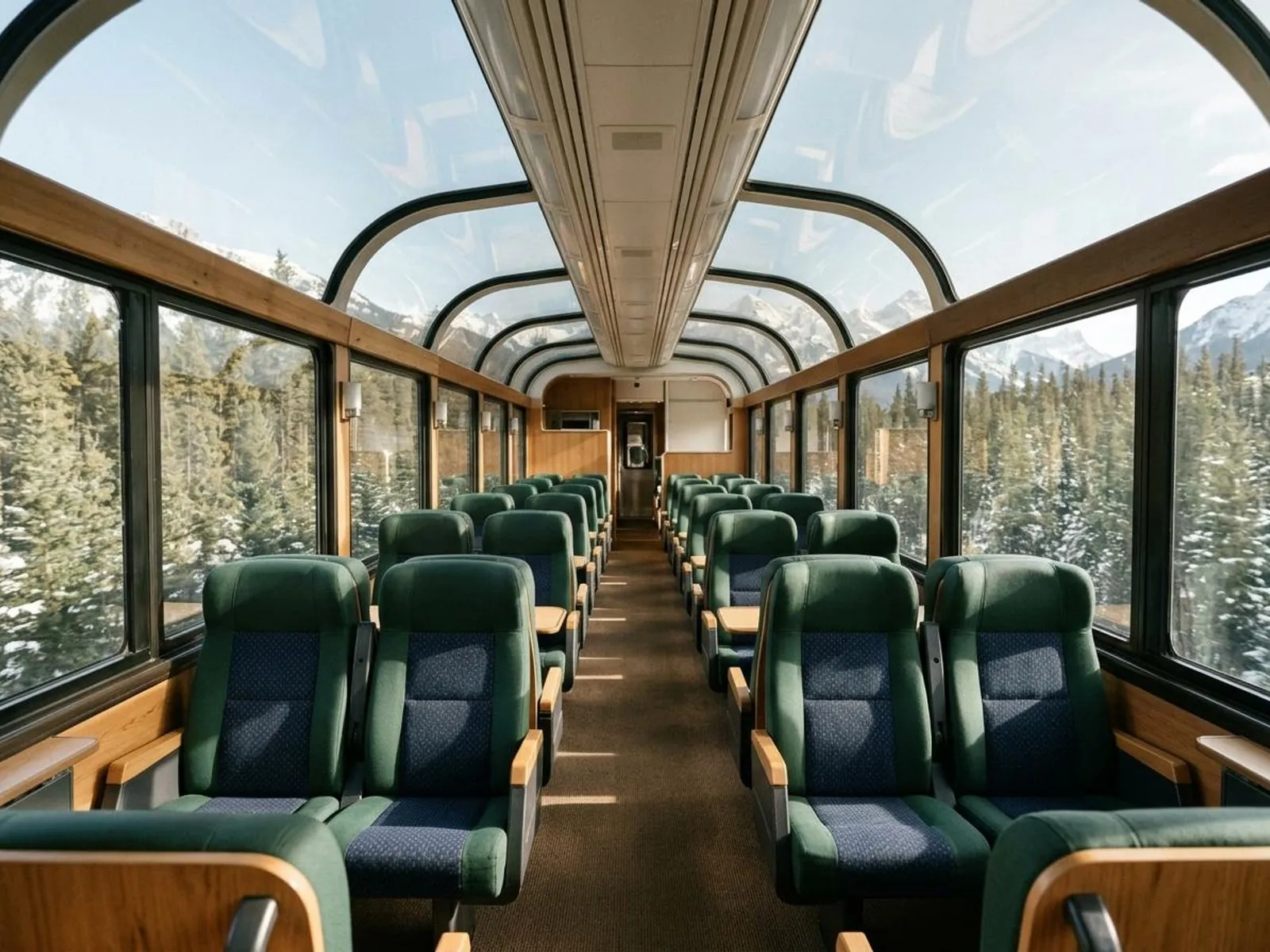
| Coach | Single-level, with oversized glass-dome windows | Bi-level: seats upstairs under a full glass dome |
| Meals | Served at your seat | Served in a dedicated dining room on the lower level |
| Outdoor space | A smaller outdoor viewing area, “best for two to three people” | A large outdoor viewing platform exclusive to the coach |
| Sample hotels named | Hampton Inn & Suites Vancouver Downtown; Elk + Avenue Hotel, Banff | Fairmont Hotel Vancouver; The Rimrock Resort Hotel, Banff; Fairmont Jasper Park Lodge |
| Day bag limit | 23 × 8 × 8 in (58 × 20 × 20 cm) | 16 × 11 × 8 in (40 × 28 × 20 cm) |
Both levels include breakfast and lunch on each train day, with tea, coffee and alcoholic and non-alcoholic drinks, and onboard Hosts who narrate the route. The hotel tier follows the service level in Vancouver and the Rockies, but not in Kamloops: both service-level pages say guests stay in “moderate three-star accommodation” there. The FAQ adds that your Kamloops hotel is assigned a few days before departure and that bedding types there can’t be guaranteed.
The trade-off comes down to space and the meal setting. GoldLeaf moves dining off the viewing deck into its own room and gives you a bigger outdoor platform. SilverLeaf keeps the panoramic windows and full meals, served at your seat. Compare the two prices for your own date. Rocky Mountaineer says SilverLeaf-to-GoldLeaf upgrades may be possible through it or your travel professional, and sometimes at the station on departure day, subject to availability (Rocky Mountaineer, Before You Travel FAQ, checked November 14, 2026).
For accessibility, the operator says some coaches are wheelchair accessible, GoldLeaf coaches have elevators for guests who can’t use the spiral staircase, and you should tell it at booking if you need assistance.
Rail-only or a package
Rocky Mountaineer sells everything as packages, from a two-day rail-only trip up to multi-night itineraries. Its “2 Day Rail, Vancouver - Banff” listing shows what the minimum includes: two days in SilverLeaf or GoldLeaf, two breakfasts and two lunches, one hotel night in Kamloops, and luggage handling and rail station transfers in Kamloops (Rocky Mountaineer, 2 Day Rail Vancouver–Banff, checked November 14, 2026). A matching two-day package runs to Jasper.
The route pages group longer options into Short Journeys (two days on one route), Rockies Highlights (one route plus hotel nights in Vancouver and the Rockies) and Circle Journeys (four to five days on two routes, starting and ending in Vancouver). Its FAQ says that if a package includes hotel nights in the Rockies, a National Parks Pass is included for the duration of the package. All guests get a complimentary motorcoach transfer to and from the train in each destination and in Kamloops (Rocky Mountaineer, Train Schedule & Station Locations, checked November 14, 2026).
Prices vary by package, service level, date and direction, and the FAQ says Canadian Goods and Services Tax applies on top. Compare the packages for your own dates rather than relying on a figure you’ve seen quoted.
Luggage and stations
Plan your bags around one fact: your checked luggage travels separately from the train, and you can’t reach it until Kamloops and your final stop. There’s no overhead or under-seat storage on board, so you carry only a day bag that fits at your feet, within the size limits in the table above. Rocky Mountaineer allows a maximum of two checked pieces per person, with a combined weight of up to 30 kg (66 lb) and no single piece over 23 kg (50 lb); oversized items may carry a surcharge, and all luggage is subject to its luggage policy (Rocky Mountaineer, packing tips and luggage information, checked November 14, 2026). You can send extra bags straight through to your final destination when you check in.
Not every train stop is a public station. The operator’s schedule page says Vancouver has its own Rocky Mountaineer station on Cottrell Street, Lake Louise and Jasper use the town stations, and the Kamloops and Banff stops are sidings with no public access, reached by the included transfer. Your final travel documents, which it emails about 45 days before travel, give your pick-up details.
Children, pets and Wi-Fi
Rocky Mountaineer has no child fares: every guest pays the same price. Children must be old enough to sit safely on their own, infants can’t ride on a parent’s lap, and the seats have no belts for car seats. Pets aren’t allowed, except trained service dogs, which travel free if you tell the operator at booking. There’s no Wi-Fi on board (Rocky Mountaineer FAQ, checked November 14, 2026).
Changes and cancellations
Read these terms before you pay. Rocky Mountaineer’s FAQ says changes are allowed but carry fees that depend on how close to departure you ask, no changes are permitted less than 15 days before your itinerary starts, and cancellation of any or all services is “fully non-refundable, unless otherwise stated in your itinerary” (Rocky Mountaineer FAQ, checked November 14, 2026). The full fee schedule is in its terms and conditions, which it publishes separately for each travel year; its 2027 and 2028 terms were last updated July 7, 2026 (Rocky Mountaineer, Terms & Conditions, checked November 14, 2026). Given the non-refundable rule, check what your travel insurance covers before you commit.
How it compares
If you want to cross the Rockies overnight in a sleeper, VIA Rail’s train is the other option on this corridor; see our guide to The Canadian, which stops at Jasper. For other daylight scenic routes, see the Alaska Railroad Coastal Classic guide, and in the Alps, the Bernina Express guide and the Glacier Express guide.
Common questions
Does Rocky Mountaineer have sleeper cars? No. It runs only in daylight, and every package includes a hotel night in Kamloops, the midpoint.
Which routes run in 2027? First Passage to the West (Vancouver–Lake Louise–Banff) and Journey through the Clouds (Vancouver–Jasper). The operator says Rainforest to Gold Rush comes to an end after its 2026 season.
Is the Kamloops hotel better in GoldLeaf? Rocky Mountaineer says guests in both service levels stay in moderate three-star accommodation in Kamloops. GoldLeaf packages use higher-end hotels in other destinations.
Can I get a refund if I cancel? The FAQ says cancellations are fully non-refundable unless your itinerary states otherwise, and no changes are allowed within 15 days of the start. Read the terms for your travel year.
When does the season run? April to October, according to the operator. Check your specific date.
Before comparing packages, Bucketlist offers a different question: how much of the holiday do you actually want to spend aboard? Choose a Rocky Mountaineer journey for the days on the train.
Sources checked November 14, 2026: Rocky Mountaineer’s First Passage to the West, Journey through the Clouds and Rainforest to Gold Rush route pages, Onboard Experience, SilverLeaf, GoldLeaf, 2 Day Rail Vancouver–Banff, Train Schedule & Station Locations, packing tips and luggage information, General FAQ, Before You Travel FAQ and Terms & Conditions, and Canyon Spirit. Check Rocky Mountaineer’s current terms for your own booking.