Amtrak Cascades: Seattle to Vancouver by train, the border and booking
How Amtrak Cascades works between Seattle and Vancouver, BC: which departures are trains and which are buses, coach versus business class, what the border agencies say about documents and inspections, and what to check before you book.

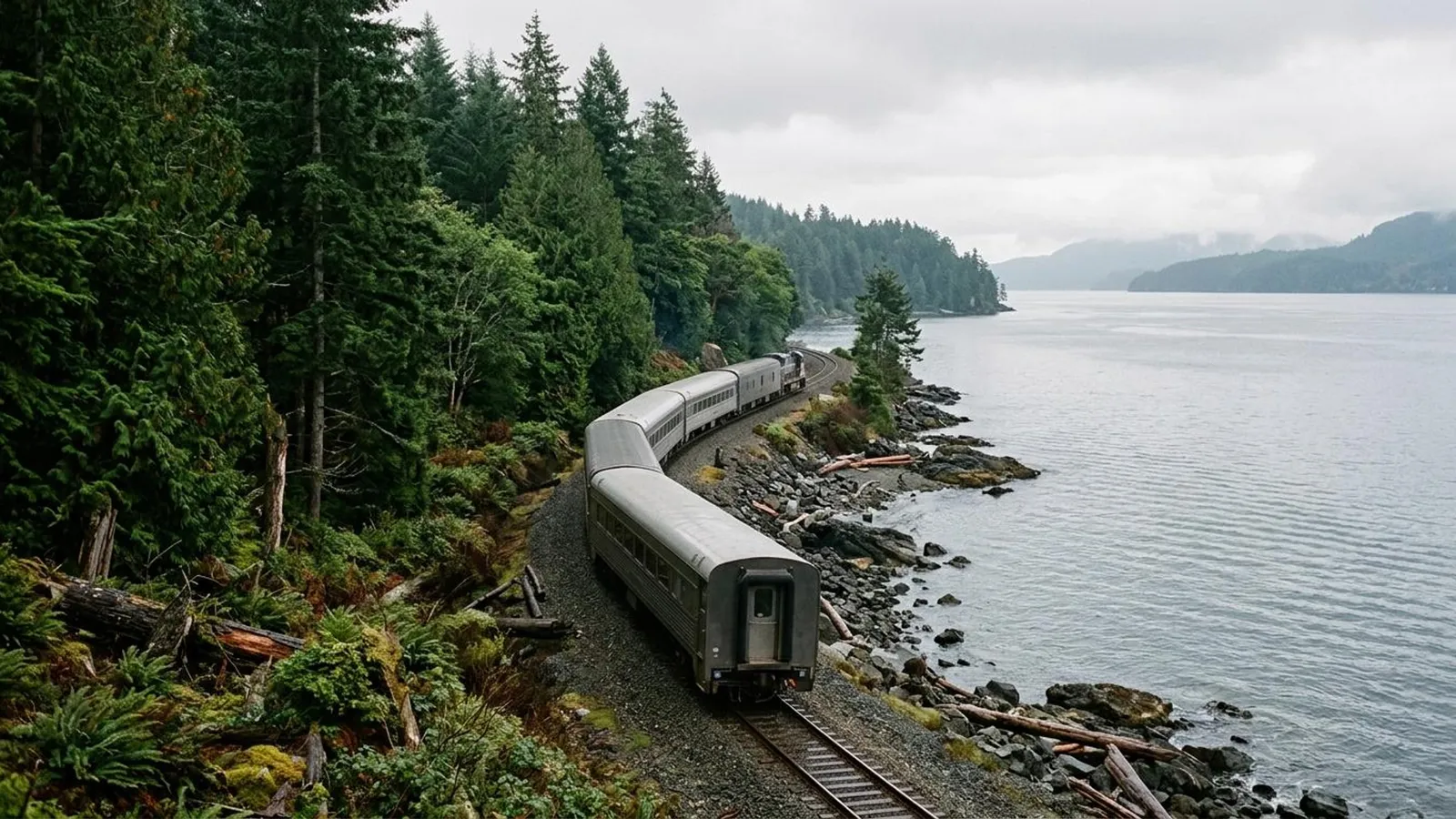
Yes, you can take a train from Seattle to Vancouver, British Columbia. The service is Amtrak Cascades, which runs between Vancouver and Eugene, Oregon. But most of the daily departures sold between Seattle and Vancouver are buses, and the border adds rules about documents, booking details and how early you arrive.
This guide is reported from the official Amtrak Cascades, Amtrak, Canada Border Services Agency (CBSA), Public Safety Canada and US Customs and Border Protection (CBP) pages linked below, all read on November 15, 2026. It isn’t a first-hand account. It gives no fares or times, because both change, and it says so where an official page didn’t answer a question.
Trains and buses share the timetable
The Amtrak Cascades timetable effective November 1, 2026 shows two trains a day in each direction between Seattle and Vancouver. The schedules page puts it as four daily trains, two round trips (Amtrak Cascades schedules, checked November 15, 2026). The same timetable shows more buses than trains on this stretch, each marked with a bus symbol and a four-digit number.
| Train | Amtrak-ticketed bus | |
|---|---|---|
| Daily departures each way, Seattle to Vancouver (timetable effective November 1, 2026) | Two | Four |
| Stops between the two cities | Edmonds, Everett, Stanwood, Mount Vernon, Bellingham | Richmond, BC only |
| Classes | Coach and business | Check the operator’s page |
| Where the border inspection happens | See the border section below | Check the operator’s page |
Source: Amtrak Cascades timetable (PDF), seating and baggage pages, checked November 15, 2026.
Trains carry three-digit numbers (516 to 519 on this stretch). The timetable also shows two more buses each way that run only between Seattle and Bellingham and don’t cross the border.
When you search for tickets, check the service number on each result before you pay. If you want the rail trip, a four-digit number isn’t it. The Amtrak Cascades pages read for this guide say almost nothing about the buses themselves, including where they stop in each city, so confirm the boarding location on your reservation.
A one-hour time difference in winter
The timetable carries this notice: “British Columbia does not change its clocks.” It adds that while Washington and Oregon are on standard time, British Columbia is one hour ahead, and that Vancouver and Richmond times are shown in local British Columbia time.
The two stations
In Seattle, trains use King Street Station at 303 S. Jackson Street. Amtrak Cascades lists a ticket agent, a ticket machine and checked baggage during station hours (Amtrak Cascades, Seattle, checked November 15, 2026).
In Vancouver, trains use Pacific Central Station at 1150 Station Street. The station page lists a ticket agent and checked baggage, and asks passengers to arrive one hour early to clear customs and board (Amtrak Cascades, Vancouver, checked November 15, 2026).
Coach or business class
Amtrak Cascades trains sell two classes (Amtrak Cascades seating and Amtrak’s Cascades route page, both checked November 15, 2026):
- Coach: reclining seats with seat-back trays, power outlets, baggage racks and free Wi-Fi. Some seats are arranged around a table for up to four.
- Business: wider seats with more legroom, fewer passengers in each car, priority boarding and getting off, and a coupon toward the bistro. Amtrak says a business class ticket is fully refundable if canceled before departure.
Amtrak Cascades began running new trainsets on September 30, 2026. Its new trains page names trains 503, 508, 516 and 519 as the new trainsets (checked November 15, 2026). In the current timetable, 516 and 519 are one train in each direction between Seattle and Vancouver.
Coach fares follow Amtrak’s fare types, and refund rules differ by type; our Amtrak discounts guide sets those out. Compare the business class price against a refundable coach fare for your date.
What Amtrak needs before you board
These are the operator’s booking and boarding rules (Amtrak, crossing the US-Canadian border and Amtrak Cascades border crossing, both checked November 15, 2026):
- A cross-border reservation needs each traveler’s date of birth, gender, citizenship and the details of the ID they’ll carry. Amtrak says you must travel with that same original document, and that the information is sent to border officers ahead of time.
- You must have the right identification before boarding the train or the bus. Amtrak’s page covers border trips on a train or an Amtrak Connection bus alike.
- In Vancouver, Amtrak’s page says to arrive at least 60 minutes before departure, and that the boarding gates close 25 minutes before departure and don’t reopen. The Amtrak Cascades border page and the timetable effective November 1, 2026 also say one hour, but the Amtrak Cascades page gives a different cutoff: it says the train is sealed before departure and you must be seated 15 minutes before. The two pages don’t match, so plan around the earlier deadline and follow the boarding instructions sent with your reservation.
- Amtrak doesn’t allow children 15 or younger to cross alone, and sets conditions for other travelers under 18.
- Amtrak says trains won’t wait for a passenger held at an inspection.
Documents: what CBSA and CBP say
Entering Canada. CBSA recommends that US citizens travel with a valid passport. Without one, it says you may present documents that show your full name, date of birth and citizenship, such as a birth certificate, a certificate of citizenship or naturalization, or a US enhanced driver’s license, and that you may be asked for photo ID if your proof of citizenship has no photo. US permanent residents arriving by land or water directly from the United States present their permanent resident card (CBSA, travel and identification documents, checked November 15, 2026). The page describes air, land and water arrivals and doesn’t mention trains by name.
Returning to the United States. CBP lists the documents US citizens can use to enter by land or sea from Canada: a US passport, a passport card, an enhanced driver’s license, or a NEXUS, SENTRI or FAST trusted traveler card, among others. It says children under 16 need only a birth certificate or other proof of citizenship, and that the same applies to travelers under 19 in a school, religious or other youth group (CBP, Western Hemisphere Travel Initiative, checked November 15, 2026). This page doesn’t mention trains by name either.
Children. CBSA says adults traveling with a minor should carry identification for the child and, where they share custody or aren’t the parent or guardian, a consent letter with the full name, address and telephone number of the custodial parents or guardians.
A passport satisfies both agencies. If you plan to use anything else, check that the same document is accepted in both directions and that it’s the one on your reservation. Officers on each side decide who is admitted.
Where the border checks happen
Northbound, into Canada. The current CBSA page read for this guide doesn’t mention trains, and the Amtrak Cascades border page says only that passengers are subject to inspection by Canadian and American officials. Neither says where a northbound train passenger is inspected, so ask Amtrak Cascades.
Southbound, into the United States. Public Safety Canada announced on June 10, 2026 that Pacific Central Station had become the first rail location in Canada to offer preclearance. Its release says travelers can now fully clear US Customs and Border Protection at the station, with customs, immigration and agriculture inspection done before departure (Public Safety Canada news release, June 10, 2026, checked November 15, 2026). The department’s preclearance page lists Vancouver Pacific Central Station (rail) among the preclearance locations (Public Safety Canada, Preclearance, modified October 7, 2026, checked November 15, 2026). A Washington State Department of Transportation release of the same date says that, beginning June 8, 2026, US-bound trains no longer need to stop in Blaine, Washington, for CBP to board (WSDOT, checked November 15, 2026).
CBP’s own pages, as read on November 15, 2026, don’t yet say the same. A CBP article still describes the older arrangement, which it calls pre-inspection: officers going to Vancouver’s train station to check admissibility only (CBP, Frontline: Preclearance, last modified December 2, 2025, checked November 15, 2026). CBP’s list of preclearance locations doesn’t name Pacific Central Station or any other rail station (CBP, Preclearance, last modified November 4, 2026, checked November 15, 2026).
None of these pages sets out the step-by-step sequence for a southbound train passenger, or says where bus passengers are inspected. Follow Amtrak’s current boarding instructions for your train, and ask Amtrak Cascades what to expect on your date.
Connecting to The Canadian, a cruise or the Coast Starlight
VIA Rail’s Vancouver station is also Pacific Central Station, at the same address, and VIA lists Amtrak trains and buses among the carriers there (VIA Rail, Vancouver station, checked November 15, 2026). So a Cascades train and VIA’s Canadian use the same building, but on separate tickets from separate companies, and neither holds for the other. The Canadian doesn’t run every day; our guide to The Canadian covers its schedule pattern and check-in advice.
The same goes for a cruise. The Port of Vancouver’s website couldn’t be read for this guide, so it doesn’t describe the cruise terminal. Check the port’s cruise pages and your cruise line’s embarkation instructions, and leave a margin that matches what you’d lose if you arrived late.
In Seattle, the Coast Starlight to Portland, the Bay Area and Los Angeles also uses King Street Station. Ask Amtrak how it treats that connection when you book.
Bags and bikes
Amtrak Cascades allows two carry-on bags and one personal item per passenger. Checked baggage is offered at Seattle, Edmonds, Everett, Bellingham and Vancouver, but not at Stanwood or Mount Vernon, and the baggage page asks you to arrive an hour before departure in Vancouver (Amtrak Cascades baggage, checked November 15, 2026). Amtrak’s route page says trainside checked bicycle service is available only between Eugene and Bellingham, so ask before planning to take a bike across the border.
First-hand note
No first-hand note yet. This guide is reported from the official sources linked above.
At either end of the line
For what to do once you arrive, Bucketlist has place pages for Seattle and Vancouver.
For the other parts of the same trip: Cruise Champion covers Vancouver’s Canada Place cruise terminal; Airline Ace covers Vancouver Airport and US preclearance; Hotel Hacker covers a night in Vancouver before a cruise or a train; and Rental Car Reviews covers driving a US rental car into Canada.
Common questions
Do I need a passport? CBSA recommends one for US citizens entering Canada, and CBP accepts one for the return. Both list other documents for land crossings. The ID you carry must match your reservation.
Where do I go through customs? Southbound, Public Safety Canada said on June 10, 2026 that train passengers now clear US customs, immigration and agriculture inspection at Pacific Central Station before departure; CBP’s own pages hadn’t been updated to say so when read for this guide. Northbound, the pages read don’t say where the Canadian inspection happens. Follow Amtrak’s current boarding instructions.
How early should I get to the station in Vancouver? Amtrak says at least 60 minutes before departure, and that the gates close 25 minutes before. The Amtrak Cascades page says you must be seated 15 minutes before.
Is the Vancouver time on my ticket local time? Yes. The timetable says Vancouver and Richmond times are British Columbia local time, which is one hour ahead of Washington while Washington is on standard time.
Sources checked November 15, 2026: Amtrak Cascades’ schedules page, timetable effective November 1, 2026, seating, baggage, border crossing, new trains, Seattle and Vancouver pages; Amtrak’s Cascades route page and crossing the US-Canadian border; CBSA’s travel and identification documents; Public Safety Canada’s June 10, 2026 news release and preclearance page; WSDOT’s June 10, 2026 release; CBP’s Western Hemisphere Travel Initiative, Frontline: Preclearance and Preclearance pages; and VIA Rail’s Vancouver station page. Check the operators’ and agencies’ current pages for your own trip.